


Künstlerinnen
Die künstlerische Praxis von Maria Walcher entsteht aus dem aufmerksamen Zuhören gegenüber Orten und Menschen. In ihrer Arbeit greift sie ortsspezifische und sozialpolitische Themen auf und nutzt Kunst als Medium der Kommunikation, um sensible Fragen sichtbar zu machen und Diskussionen anzuregen. Kollaborationen mit unterschiedlichen Gruppen, der Dialog zwischen verschiedenen Disziplinen sowie Interaktionen im öffentlichen Raum spielen dabei eine zentrale Rolle. Die Wahl der Materialien und Ausdrucksformen wird jeweils vom Kontext, den beteiligten Personen und der konkreten Situation bestimmt.
Maria Walcher (Brixen, *1984) studierte an der Bauhaus-Universität Weimar, an der Universität für angewandte Kunst Wien sowie an der Faculdade de Belas Artes in Lissabon. Im Jahr 2021 wurde ihr der Paul Flora Preis verliehen und 2022 wurde sie mit dem RLB Förderpreis ausgezeichnet. Ihre Arbeiten wurden unter anderem bei der Bolzano Art Week (2023), im Frauenmuseum Hittisau (2023), im Tirol Panorama Innsbruck (2022), Franzensfeste (2021) präsentiert.
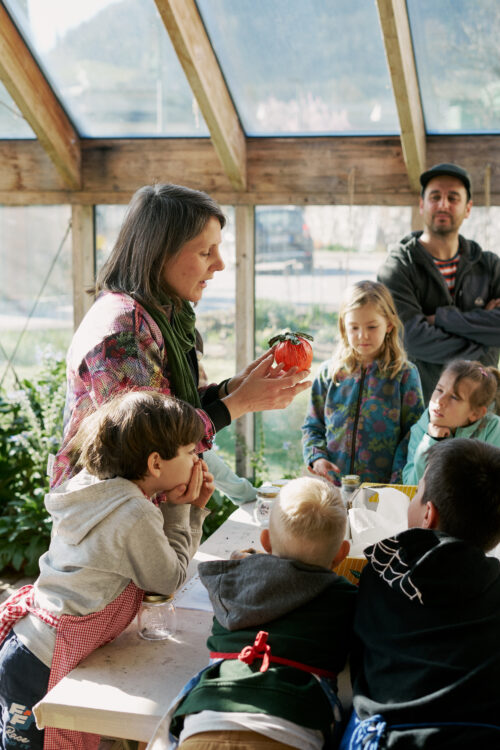
Im Schuljahr 2023/2024 arbeitete Maria Walcher mit BAU im Rahmen des Projekts Caldera Paradullis zusammen. Gemeinsam mit den zweiten Klassen der Grundschule Algund entwickelte sie eineWorkshop-Serie zur Materialität, bei dem die Kinder mit Keramik arbeiteten. Aus der Beobachtung von Tomaten und ihren vielfältigen Formen entstanden Schalen in Tomatenform, während Tomatenscheiben zu lebendigen, farbenfrohen Tellern wurden.
Artist
Maria Walcher’s artistic practice grows out of attentive listening to places and people. Her work engages with socio-political and locally rooted themes, using art as a means of communication to address sensitive issues and to stimulate dialogue. Collaborations with diverse groups, exchanges across disciplines, and interactions in public space are central to her creative process. The choice of materials and forms of expression is shaped by the specific context, the people involved, and the situation at hand.
Maria Walcher (Brixen, *1984) studied at the Bauhaus-Universität Weimar, the University of Applied Arts Vienna, and the Faculdade de Belas Artes in Lisbon. In 2021 she was awarded the Paul Flora Preis and in 2022, she was awarded the RLB Förderpreis. Her work has been presented, among others, at Bolzano Art Week (2023), Frauenmuseum Hittisau (2023), Tirol Panorama in Innsbruck (2022), Fortezza/ Franzensfeste (2021).
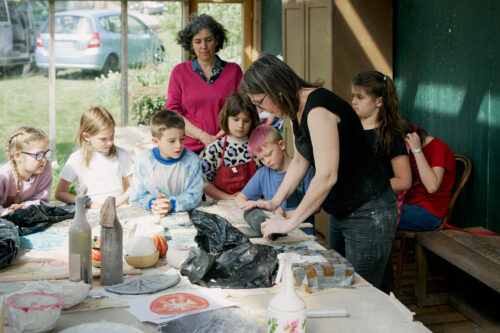
During the 2023/2024 school year, Maria Walcher collaborated with BAU on the project Caldera Paradullis. Together with second-grade classes from the Lagundo primary school, she developed a workshop series focused on materiality, inviting children to work with ceramic. By observing tomatoes and their many shapes, tomato-inspired bowls emerged, while slices of tomato were transformed into lively, colorful plates.
Artista
La pratica artistica di Maria Walcher nasce dall’ascolto attento dei luoghi e delle persone. Il suo lavoro affronta temi socio-politici e legati al contesto locale, utilizzando l’arte come mezzo di comunicazione per sollevare questioni delicate e stimolare il dibattito. Collaborazioni con gruppi diversi, lo scambio tra discipline e le interazioni nello spazio pubblico sono elementi centrali del suo processo creativo. La scelta dei materiali e dei linguaggi è influenzata dal contesto, dalle persone coinvolte e dalla situazione specifica.
Maria Walcher (Bressanone, *1984) ha studiato alla Bauhaus-Universität Weimar, all’Universität für angewandte Kunst di Vienna e alla Faculdade de Belas Artes di Lisbona. Nel 2021 le è stato assegnato il Paul Flora Preis e nel 2022 è stata vincitrice del RLB Förderpreis. Il suo lavoro è stato presentato, tra gli altri, a Bolzano Art Week (2023), Frauenmuseum Hittisau (2023), Tirol Panorama di Innsbruck (2022), a Fortezza (2021).
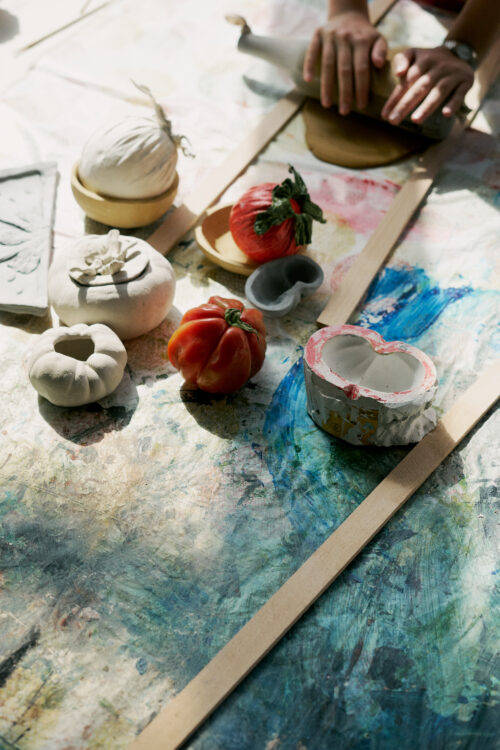
Nel corso dell’anno scolastico 2023/2024, Maria Walcher ha collaborato con BAU al progetto Caldera Paradullis. Insieme alle classi seconde della scuola primaria di Lagundo, ha sviluppato un ciclo di laboratori dedicati alla materialità, invitando bambine e bambini a lavorare con la ceramica. Attraverso l’osservazione dei pomodori e delle loro forme molteplici, sono nate ciotole ispirate a questo frutto, mentre le fette di pomodoro si sono trasformate in piatti vivaci e colorati.